Skip to content

If you’re shopping for your first fire rope dart, you’ve probably noticed two materials come up over and over again: Technora and Dyneema (aka Spectra or sold under names like Dragon Rope or Phoenix Rope).
Both are excellent options, look pretty similar, and both have earned a loyal following. The good news is there really isn’t a wrong choice. The better news? Rope darts make switching between them incredibly easy since most heads attach with quick links.
Let’s break down the differences so you can decide which one fits your style.
Technora
If you’re buying your first fire rope dart, Technora is what we’d recommend almost every time.
Technora is a para-aramid fiber, similar to the Kevlar used in many fire props, but with excellent heat resistance. Unlike Dyneema, Technora does not melt, making it much more forgiving if your tether accidentally touches the wick while you’re learning.
Every beginner eventually tangles their rope while fire dancing. With Technora, those mistakes are much less likely to damage your tether, which lets you focus on learning instead of worrying about ruining your rope.
Modern Technora is smoother on the skin than earlier versions. As the colored coating wears in, the rope gradually becomes smoother. That said, many intermediate and advanced rope dartists report that Technora sticks to the skin a bit more than Dyneema, especially during wraps and empty knots.
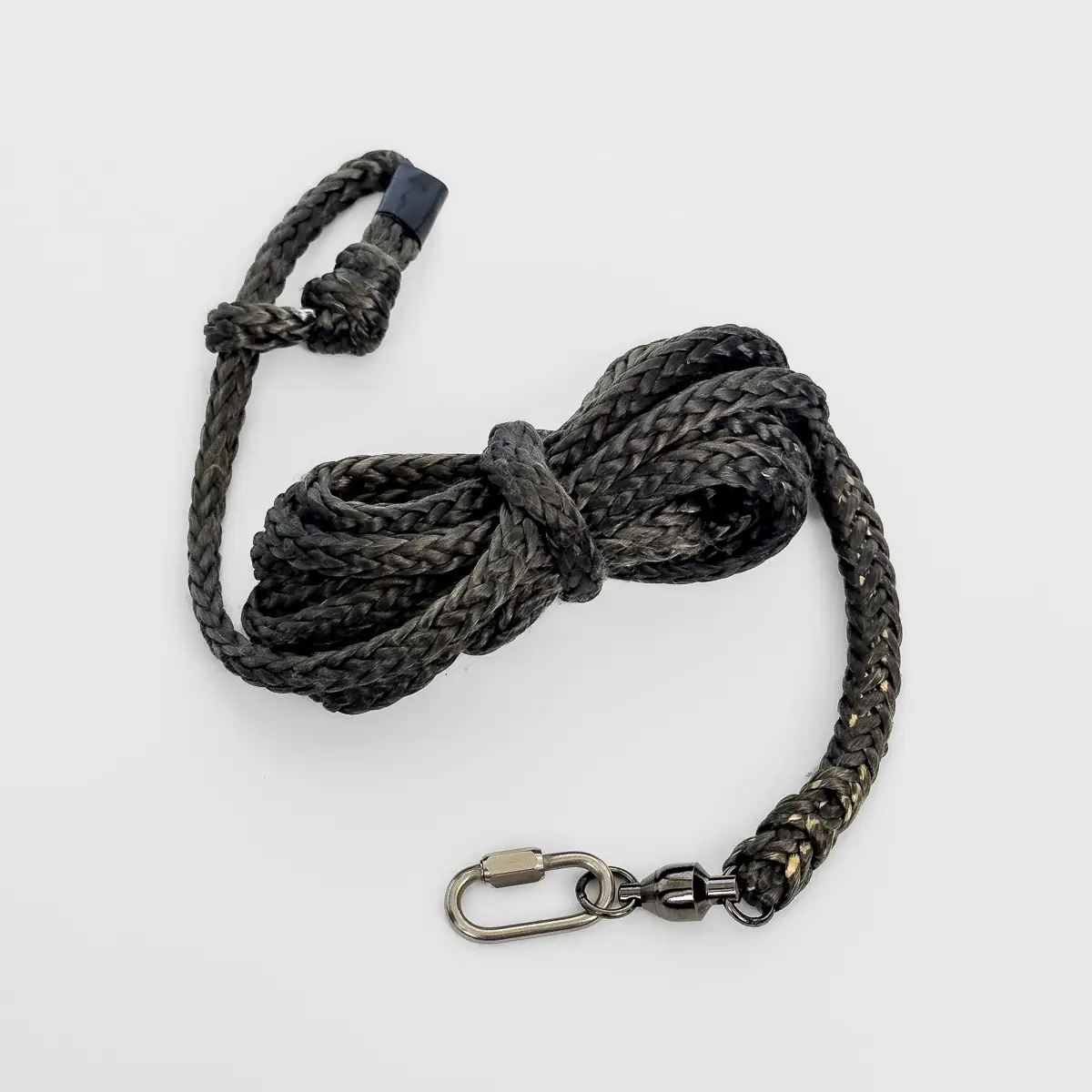
Another advantage is construction. Since the entire rope is heat resistant, a Technora leash is usually made from one continuous piece of 12-strand single braid, spliced at both ends. It’s clean, simple, and incredibly durable.
Fun fact: Technora has even been used by NASA in the parachute systems that helped land several Mars rovers. If it’s trusted to slow a rover hurtling toward Mars, it’ll probably survive your local flow jam.
Pros
- Doesn’t melt from accidental wick contact
- Great for beginners
- One-piece construction
- Extremely durable
Cons
- Slightly rougher on skin than Dyneema
- Has potential to stick to skin more
Dyneema
Dyneema (and its sister brand Spectra) is an ultra-high molecular weight polyethylene (UHMWPE) rope that’s become a favorite among experienced rope dartists because of how smooth it feels.
It’s commonly used in sailing, climbing, and other high-performance applications where strength and low weight matter. Most Dyneema ropes also come with a factory coating that improves abrasion resistance and handling. That coating takes a little time to wear in, but once it does, the rope becomes noticeably smoother on your skin during flow.
Some generic UHMWPE ropes skip this coating altogether, and flat “Dragon Rope” style leashes often feel smoother right out of the box since they’re typically made from Dyneema chafe sleeves instead of heavily coated braided rope.
The biggest drawback is heat: unlike Technora, Dyneema melts.
To solve this, most fire rope dart leashes use Technora leads, usually around 12 inches long, between the hardware and the Dyneema rope. These end sections help keep the main rope away from the wick.
That said, tricks like cradles and certain wraps still have a higher chance of bringing the Dyneema itself into contact with the flame.
Most of the time, the rope won’t fail immediately. Instead, you’ll notice small melted plastic beads forming on the surface. Those beads make the rope rough and uncomfortable long before the tether becomes unsafe to use. That said, if there’s enough heat or prolonged contact with the flame, Dyneema can absolutely fail completely. I’ve personally seen large fire rope dart builds melt through a Dyneema tether in the middle of a stage performance. It’s uncommon, but it’s a good reminder to inspect your tether regularly, avoid unnecessary contact with the wick, and ensure no fuel soaks into your tether.
That being said, it’s still one of the most popular materials for intermediate and advanced dartists looking for a smoother feeling.
Pros
- More smooth (once broken in)
- Favorite among many experienced rope dartists
- Lightweight and very strong
- Easy on the skin
Cons
- Can melt if it contacts the wick
- Needs a break-in period if heavily coated
Other Options
While Technora and Dyneema are by far our favorite choices, there are a few other materials worth mentioning.
Zylon (PBO)
Often sold under names like Space Rope, Zylon is even more heat resistant than Technora. The downside is cost. It’s one of the most expensive rope dart materials available and has relatively poor UV resistance, so don’t leave it baking in the sun.
From the feedback we’ve collected, many people also find it a bit too slippery compared to other standard options.
Cotton Rope
Cotton feels surprisingly nice on the skin when it’s new, but it wears out much faster than the other materials on this list.
Since cotton isn’t particularly heat resistant, fire setups usually rely on a metal chain between the rope and the hardware. Personally, we’re not huge fans of this approach. Metal burns are one of the most common ways people get burned while fire spinning, so adding more exposed metal isn’t something we’re excited about.
Silk Leashes
One of the coolest recent innovations comes from Rope Dart Academy, which occasionally releases silk fire rope dart leashes.
These use silk for the main tether, Kevlar stitching, and Technora leads near the hardware. We haven’t had the chance to test them ourselves yet, but it’s exciting to see companies continuing to experiment with new materials.
Final Recommendation
If you’re buying your first fire rope dart, we’d recommend Technora almost every time.
It’s more forgiving, won’t melt from accidental contact with the wick, and gives you a larger safety margin while you’re learning.
If you’ve already developed your style and want the smoothest experience possible, Dyneema is an excellent upgrade. It’s easy on the skin and has earned its reputation for a reason. Just remember to inspect it regularly and keep it away from the flame whenever possible.
The nice thing is you don’t have to make a forever decision. Most rope dart heads attach with quick links, so switching between the two only takes a couple of seconds.
Regardless of which material you choose, tethers should never be soaked in fuel. Only the Kevlar wick should be saturated. Allowing fuel to soak into the tether greatly increases the amount of heat it experiences and can dramatically shorten its lifespan. In the Dyneema failure mentioned above, fuel soaking into the rope was likely a major contributing factor.
Fire Safety Note: After spinning your prop on fire, be sure to let it air out before stuffing it in a bag for storage. The fumes from the fuel need to evaporate so they don’t soak into your tethers.
At the end of the day, they’re both excellent materials. We just think Technora gives beginners one less thing to worry about, and that’s a pretty good place to start.