If you’ve ever tried shopping for a flow staff and immediately fallen into a rabbit hole of measurements and people confidently saying completely different things on the internet… welcome.
The truth is, there’s no one-size-fits-all answer for staff sizing. The best staff length depends on what kind of staff you’re spinning and your style of movement.
This guide breaks down the most common types of flow staffs:
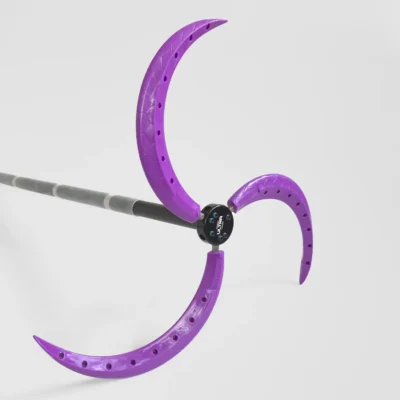
Dragon Staff Sizing
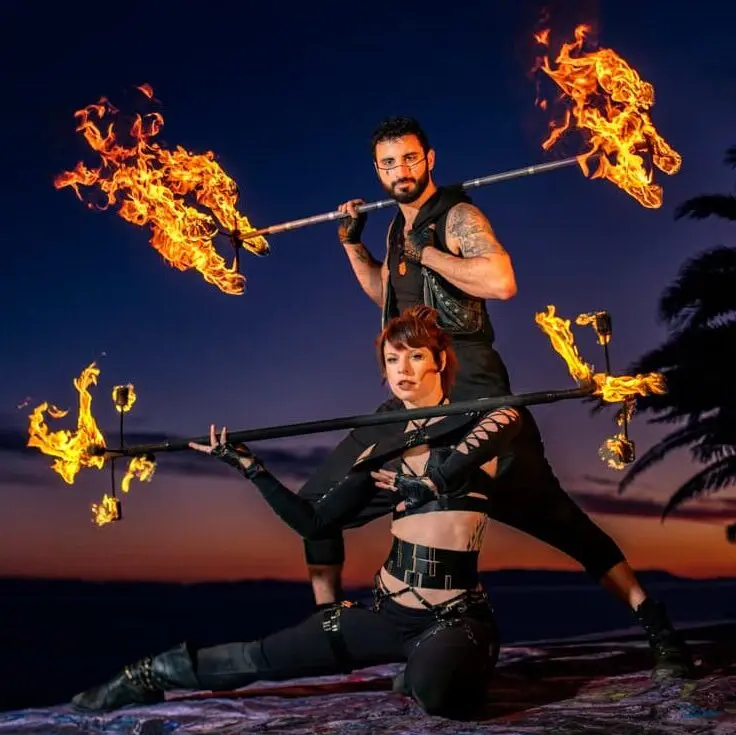
If you want the short answer:
Chin height is the gold standard for dragon staff.
That’s the easiest all-around recommendation for most people and the best place to start if you’re not sure what style you’ll end up liking.
A chin-height dragon staff gives you a solid balance of:
- enough grip area
- enough clearance for vertical plane spinning
A lot of people size dragon staffs based mostly on horizontal plane flow, and if that’s all you ever do, then sure! You can get away with going a little longer. But if you like to flow in vertical plane and hit deep lunges, a staff that’s too long starts becoming more annoying than helpful since you’ll be worrying about hitting the floor. I even prefer it to be a couple inches shorter than chin height for these reasons.
Longer Dragon Staffs = Slower Rotation
The longer the staff, the slower its rotational speed. That can absolutely be a good thing.
A longer dragon staff may work well if:
- you like a slower, floatier style
- you mostly stay in horizontal plane
- you want more usable grip area
- you prefer a more dramatic visual arc
That said, if you like moving fast or doing more athletic flow, going too long can start to feel clunky. On the flip side, if you’re interested in partner dragon staff (two people spinning the same staff together), a 67–72 inch dragon staff is usually the standard.
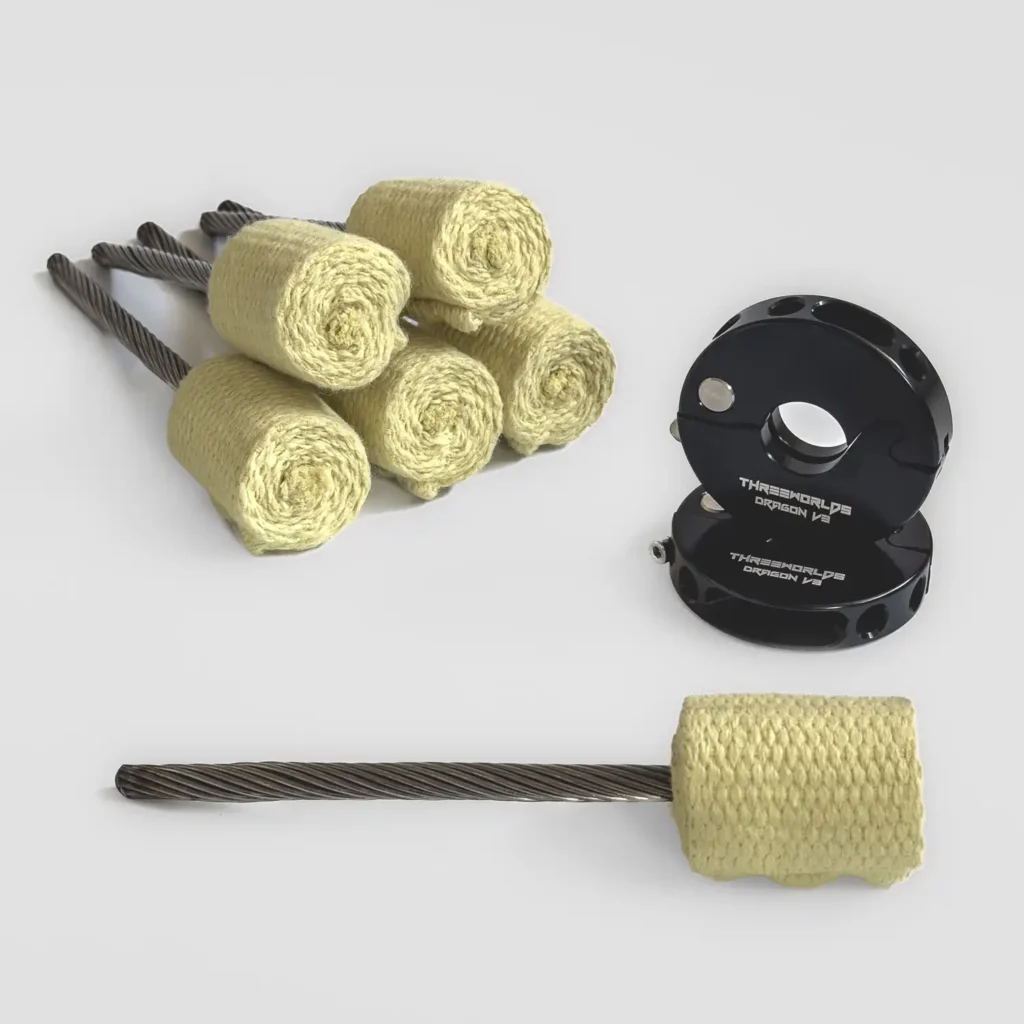
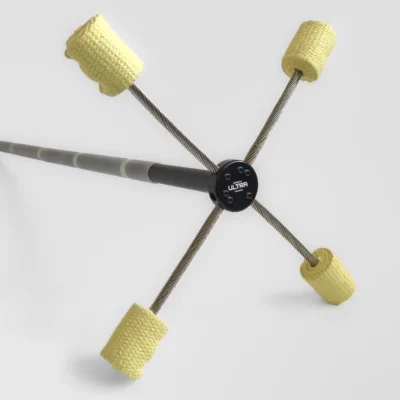
Dragon Staffs With End Wicks

This is a big one that people often overlook.
If your dragon staff has an end wick (or LED), your usable staff area gets reduced by about 4-6 inches on each side. That means a dragon staff that would normally feel perfect at chin height might suddenly feel more cramped than expected.
So as a general rule:
If your dragon staff has end wicks, go slightly longer than chin height.
That gives you enough extra space to still have a comfortable grip area without making the staff feel too restrictive. We don’t recommend dragons with end wicks for partner dragon staff for these reasons.
TL;DR for Dragon Staff
- Gold standard: Chin height
- If you have end wicks: Go slightly longer than chin height
- If you mostly spin horizontal plane: You can experiment with a longer staff
- If you do vertical plane or deep lunges: Chin height still works well, or even a couple inches shorter
Contact Staff Sizing
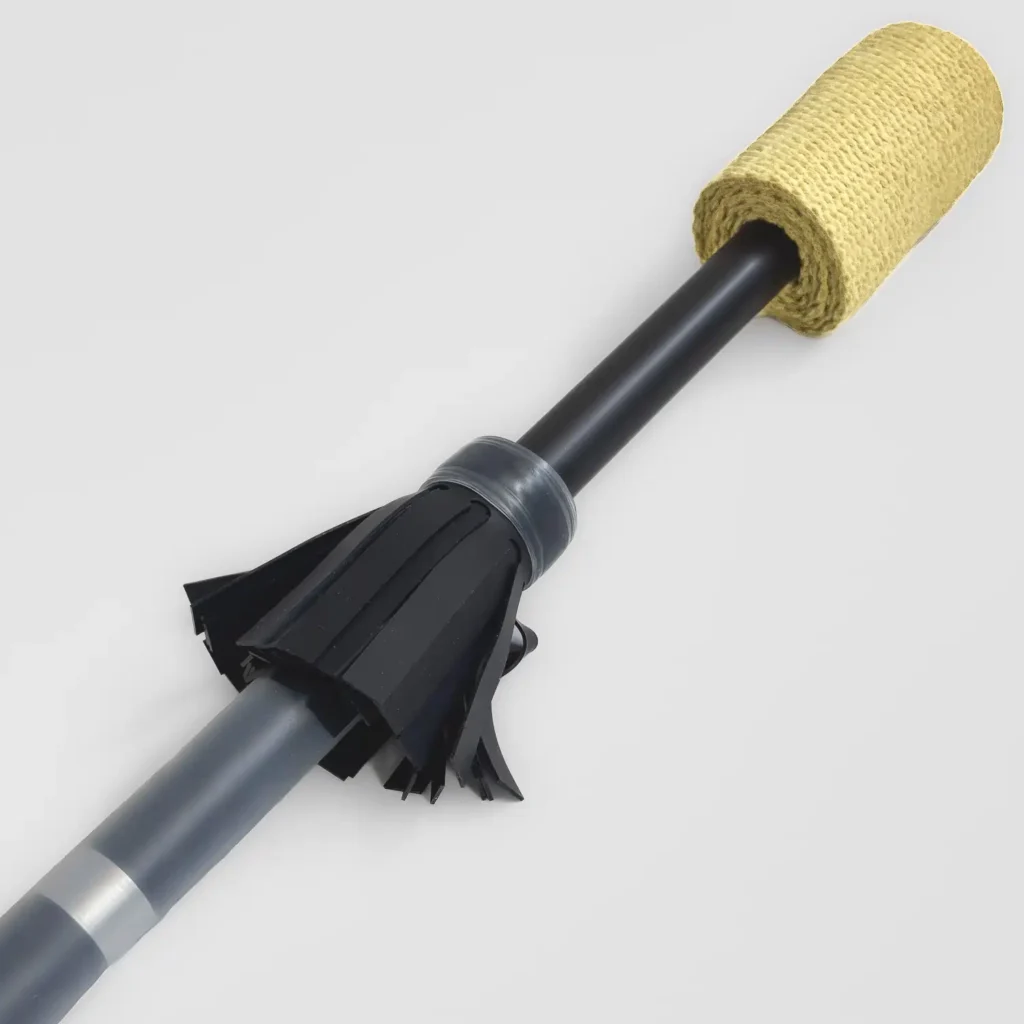
Contact staff follows a lot of the same logic as dragon staff, but there’s a little more room for personal preference depending on how much staff spinning you like to mix into your flow.
Chin height is the gold standard for contact staff.
For most people, chin height is still the best starting point for a contact staff.
It gives you enough length to:
- do all standard contact staff moves
- practice vertical and horizontal plane movements
- mix in basic staff spinning
If you’re new and don’t yet know your style, this is the easiest and safest place to begin.
Personally, I prefer a contact staff that’s shorter than chin height (by about 8 inches).
Why?
Because once you start mixing spin staff elements into your contact flow, shorter staffs can become more practical.
A shorter contact staff can help with:
- Underarm clearance
- Faster spinning
- Double contact staff flow
Another thing to consider: if you’re in a deep stance and trying to spin the staff downward with your arm extended, a longer contact staff can hit the floor way more easily than you’d think.
That’s one of the biggest reasons I personally lean shorter for contact staff. But that’s a stylistic choice too.
TL;DR for Contact Staff
- Gold standard: Chin height
- If you mix in staff spinning or faster flow: Slightly shorter than chin height can feel better
- If you are contact flow focused: Chin height
Spin Staff Sizing
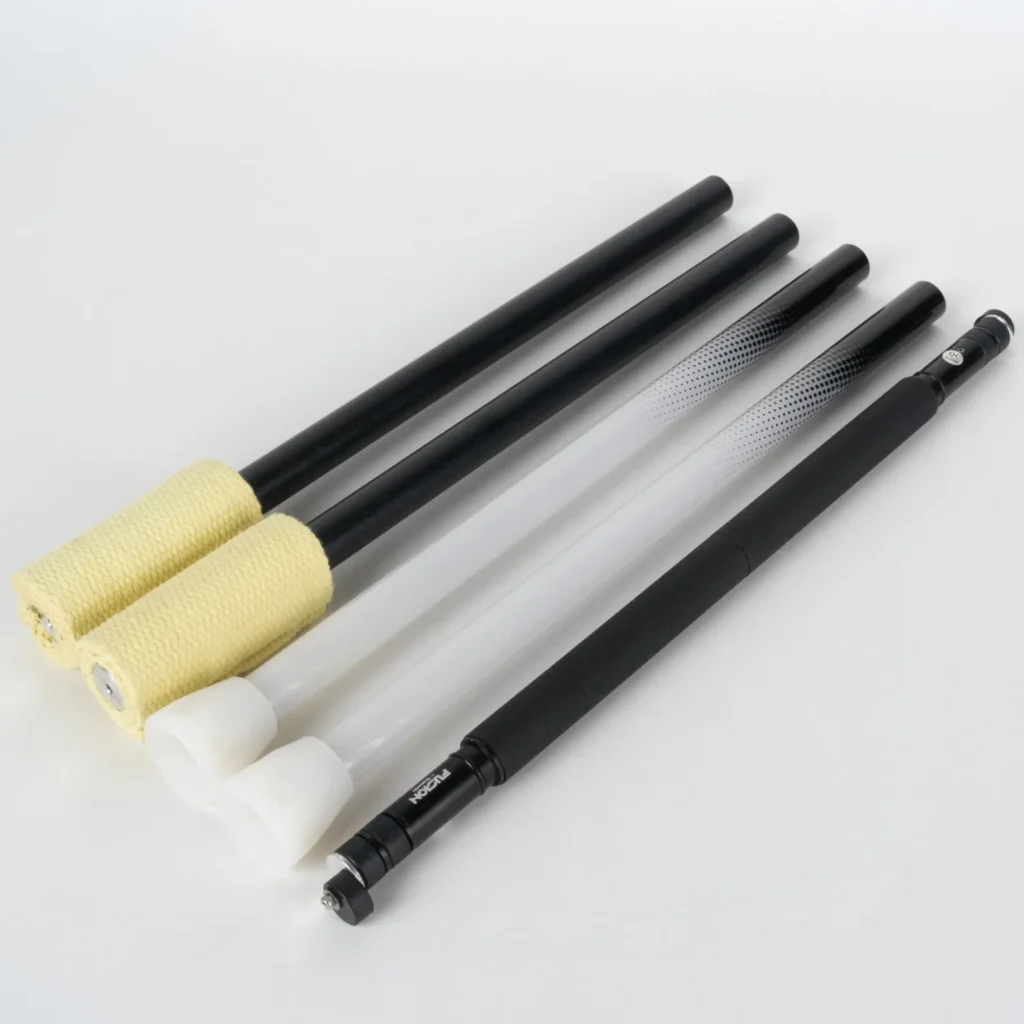
This is where things start to shift a bit.
Unlike dragon staff or contact staff, spin staffs don’t really follow a universal “chin height” rule in the same way. That’s because spin staff is generally meant to move faster, and shorter staffs simply do that better.
A good spin staff is usually:
- short
- light
- gripped only in the center
- generally between 35-55 inches
Unlike contact staff, where the full length is often used across the body, spin staff is typically held in the center grip zone and used for faster rotational movement in front of or around the body (like in weaves).
That means you usually don’t want a spin staff as long as chin height. At some point if it gets too short it ventures into the range of a double staff length.
TL;DR for Spin Staff
- Normal length range is 35-55 inches
- Shorter staffs are faster, lighter, and more maneuverable
- Best for martial-style and fast-paced flow
Double Staff Sizing
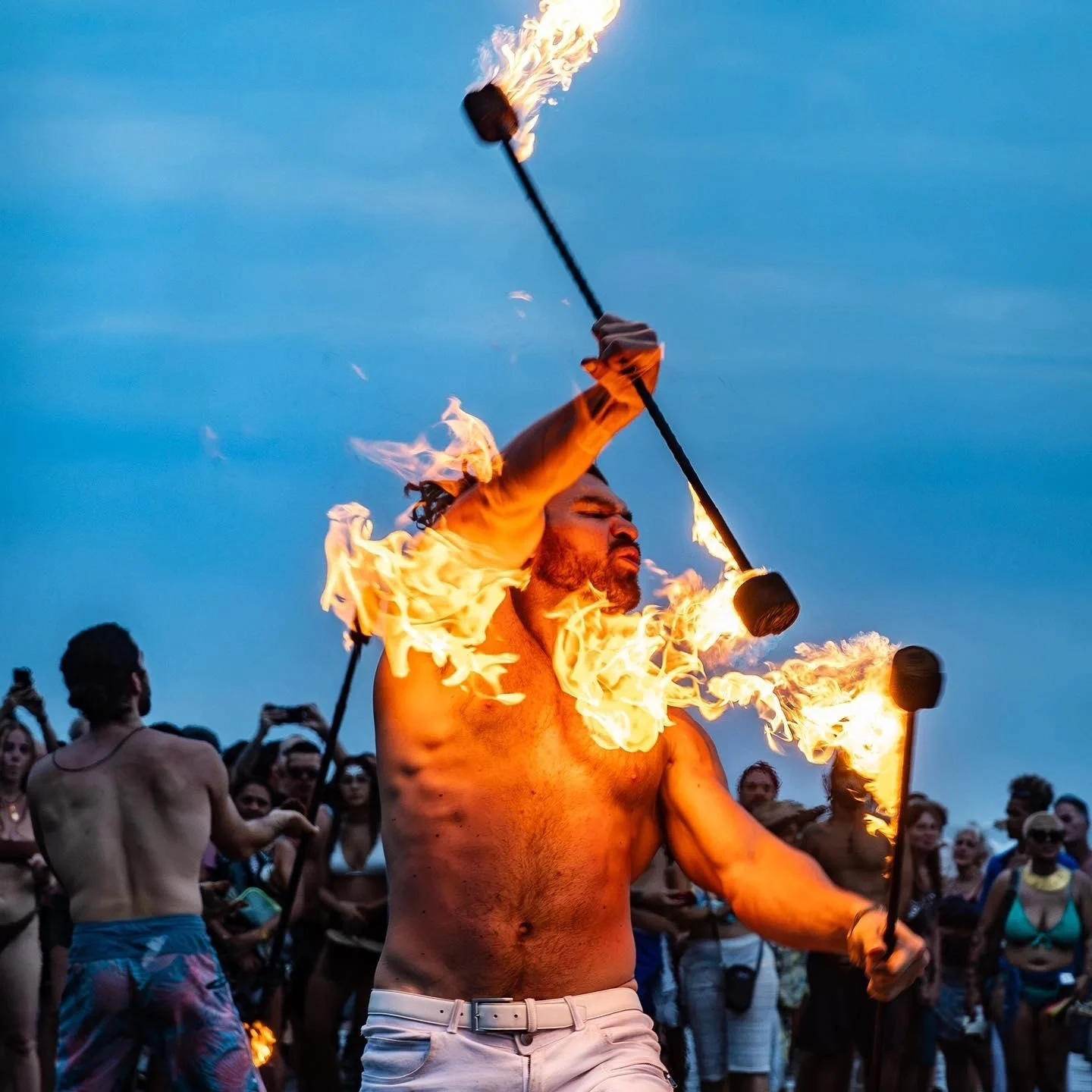
Double staffs are typically much shorter and usually fall between:
26-36 inches, depending on your height
The most important rule here:
They should not hit or burn your face when spinning inward toward yourself.
That’s the main sizing test. If they’re clipping your face, they’re too long. Simple. This is especially important when doing moves like finger spins inside your arms towards your face or cap variations.
For a lot of people, 32 inches is the most common all-around size, especially for fire double staffs. Even if a shorter length technically fits your height better, anything too short can feel very hot when spinning fire, which is why many people won’t go shorter than 32 inches.
I’m 6’4″ and prefer to use 36 inch staffs, but human arms don’t come in standard sizes so you might have to experiment.
PRO TIP: Go to the hardware store and get a couple cheap 36 inchwood dowels (or 1m depending on where you are). You can keep cutting a piece off until you find your perfect length.
A lot of spinners also keep their practice, LED, and fire doubles the same length so everything translates cleanly. Meaning if they size up their fire doubles because they’re accounting for the fire, then they size up their LED and practice doubles too.
TL;DR for Double Staffs
- Most common range: 26-36 inches
- Most common size: 32 inches
- Main goal: don’t hit or burn your face
Conclusion
If you’re brand new and feeling overwhelmed, here’s the simplified version:
Quick Staff Sizing Summary
- Dragon Staff: Chin height
- Dragon Staff with End Wicks: Slightly longer than chin height
- Contact Staff: Chin height
- Spin Staff: 35-55 inches (no set standard)
- Double Staffs: 26-36 inches (depending on arm length and fire safety) with 32 inch being most common and minimum for fire doubles
The deeper you get into flow arts, the more your preferences will evolve. Your ideal staff size might change as your style changes. And if you get into the realm of weirder types of staff flow like triple staff or juggling staves, there’s so much nuance and preference involved.
At the end of the day, staff sizing is part function, part preference, and part “what kind of weird movement stuff are you trying to do with it?”
And honestly, that’s half the fun.
If you’re still not sure what length is right for you, feel free to reach out! We’d rather help you choose the right staff the first time than have you accidentally order something you’ll regret.
Check out our collection of dragon staffs and other staffs→